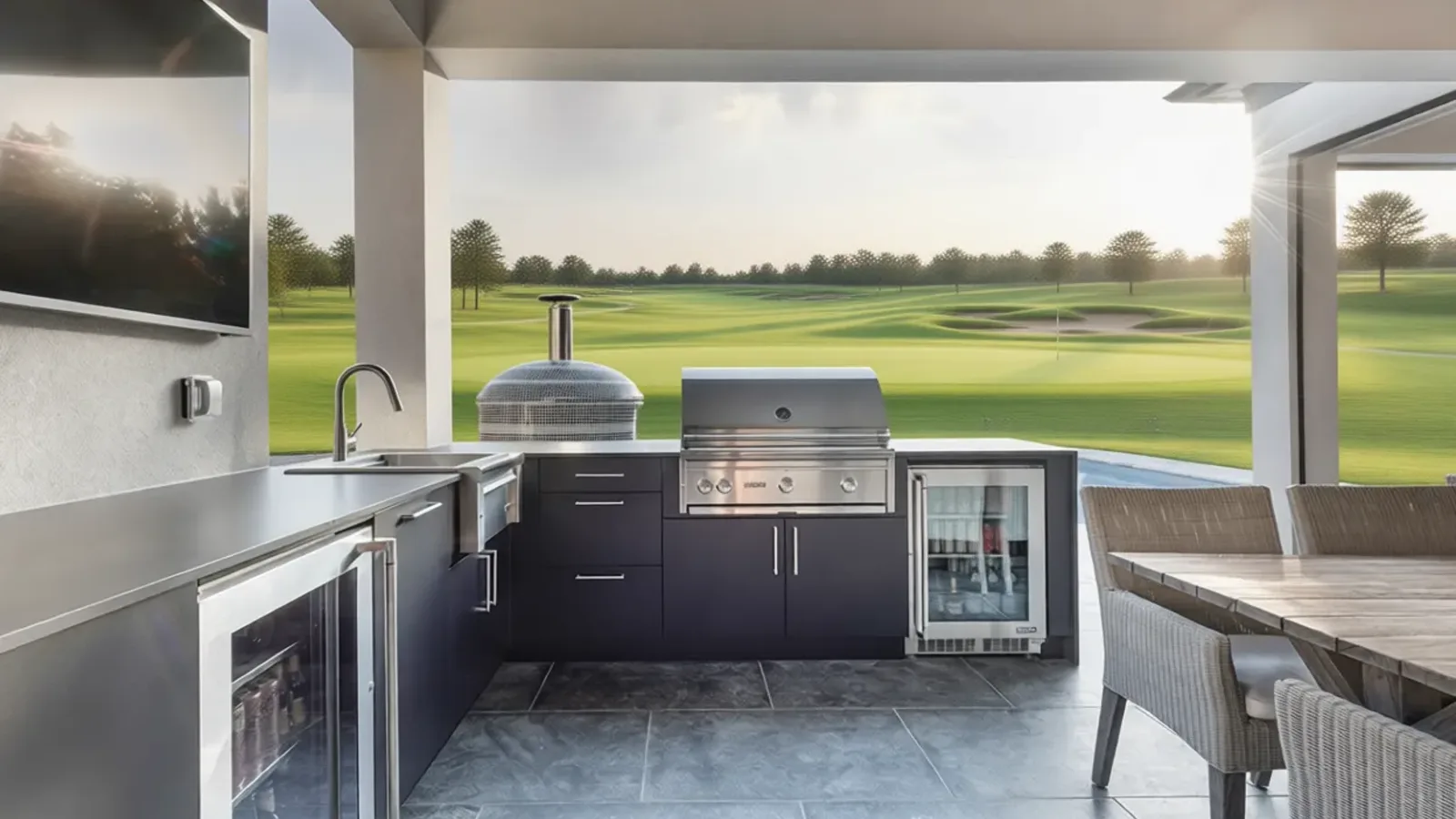
Outdoor Kitchens in Tampa, FL — Built to Live Outside
Tampa homeowners use this free matching service to get itemised outdoor kitchen quotes from local pros: islands, countertops, grills and the gas and electrical work that has to happen first.
Tampa homeowners use this free matching service to get itemised outdoor kitchen quotes from local pros: islands, countertops, grills and the gas and electrical work that has to happen first.
Tell us what you need and we route it to local outdoor kitchen pros who do this work. Free, no obligation.
A built-in outdoor kitchen is a permanent structure before it is a cooking appliance, and the published numbers only make sense once you know which of the two you are paying for.
A shade structure is the part of an outdoor kitchen that decides how many months of the year the rest of it actually gets used.
An outdoor fireplace is built around one 1,800-degree event, and every part of the specification exists because of it.
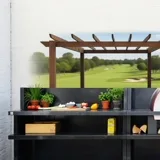
An outdoor bar is two jobs in one structure: a counter run built to bar height, and a small commercial beverage system with water, power and a drain.
Outdoor lighting is specified in layers, not in fixtures, and any one layer on its own fails at exactly the job it was bought for.
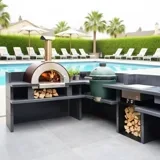
A pizza oven is a masonry appliance: the heat is the easy part, and the footprint, the mass and the clearance to combustibles are what the build is really about.
Figures are the published bands from the outdoor-kitchen source pack: 15,000 - 35,000 is the typical project, 8,000 - 15,000 a basic built-in grill kitchen, 25,000 - 50,000 a custom build with pergola, refrigeration, cabinetry, sink and fireplace. Prices vary 30 to 40 percent for the same layout by appliance brand and stone selection, and appliances, countertop material and utility runs are the big-ticket items.
Tampa Bay is humid-subtropical: the National Weather Service's Tampa Bay office covers a wet season running roughly June through September that supplies most of the year's rain, alongside summer heat indices that routinely pass 100F and year-round humidity that never really dries out. Layer an airborne-chloride film over everything within a few miles of the bay and the Gulf -- which is all seven of these towns -- and the specification is set by salt and moisture more than by heat. That drives three decisions: 316 (marine) stainless for every exposed metal surface including hinges, slides and fasteners, because the 2-3% molybdenum that grade 304 lacks is what resists chloride pitting in coastal air (the Australian Stainless Steel Development Association notes grade 316 is 'often chosen for more aggressive environments such as sea-front buildings and fittings on wharves and piers'); sealed marine-grade polymer boxes or a CMU/concrete core rather than standard 'outdoor' MDF or particleboard, which delaminates and swells in coastal humidity; and countertops that tolerate thermal shock and UV without an annual reseal. Rinsing metal with fresh water after salty spells and using breathable covers rather than non-breathing tarps extends the life of all three.
Twenty free tools: an outdoor kitchen cost estimator, a material selector, a measurement calculator, a permit checker and a contractor question list — no sign-up.
Open all 20 tools → | Build advisor